
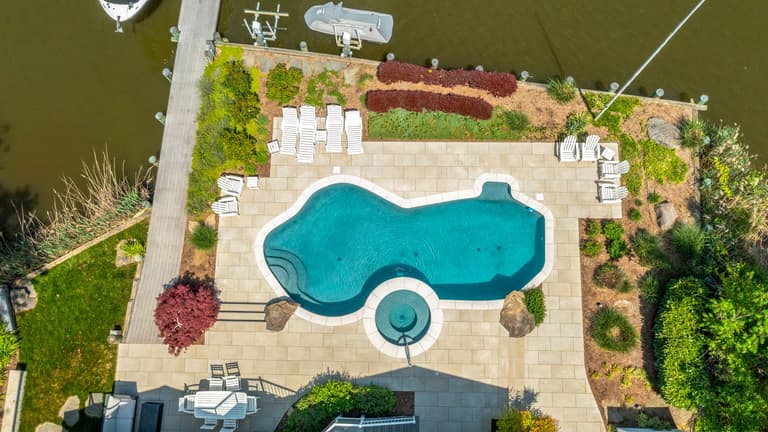
To-scale
Hardscape & Landscape Plan
Precise, to-scale plans set the blueprint for hardscape, grading, lighting, and every construction detail — so the build goes in flawlessly.
Guides & Resources
Care guides, a look at how we design, and straight answers on cost, permits, and paver upkeep — everything to plan your project and keep it looking new, from a crew that's worked Maryland yards since 2006.
No guides match that search. Try another term or tap “All”.
Care guide
Fresh sod roots fast when it's watered right — and struggles when it isn't. Follow this for the first two weeks, then ease off as the roots take hold.
Download the printable version (PDF)Begin watering as soon as you've laid enough sod to run a sprinkler. The soil needs to be moist 3–4 inches below the sod, which can take an hour or more per area. Water slow and long so the ground absorbs it instead of letting it run off.
Water every day for the first two weeks, and only in the mornings — watering before 9 AM means less is lost to evaporation and the grass dries before evening. If daytime temperatures are in the mid-60s or above, lay the sod the same day it arrives.
Aim for 1 inch of water each time. Set an empty can or container on the lawn and check it every 15 minutes to learn how long your sprinkler takes to reach 1 inch — usually 45 minutes to an hour. Watch for dry spots the sprinkler misses, especially along edges. Keep the soil moist but never muddy or squishy, and don't let it dry out.
Yes, though it's unlikely. The soil should be damp, not soupy — check with a finger. Clay soils need a little less water; sandy, well-draining soils need a little more.
At 12–14 days, gently tug up a corner of sod — white roots forming underneath mean it's establishing. From there you can cut back to watering every 2–3 days. Through the first year, stick to a schedule (especially in drought); an established lawn needs about 1 inch of water per week.
Care guide
New seed needs different care as it grows. Water light and frequent while it germinates, then shift to deeper, less-frequent soakings to drive the roots down. Find the phase you're in and follow it.
Days 1–14
Germination
Keep seed constantly moist — not soaked
Weeks 3–5
Early Growth
Start building root depth
Weeks 5–8
Establishment
Train roots to grow deeper
Design
Every property is unique. Our custom designs bring your vision to life with thoughtful planning, creative detail, and functional beauty — here's the level of design you can expect.
Precise, to-scale plans set the blueprint for hardscape, grading, lighting, and every construction detail — so the build goes in flawlessly.
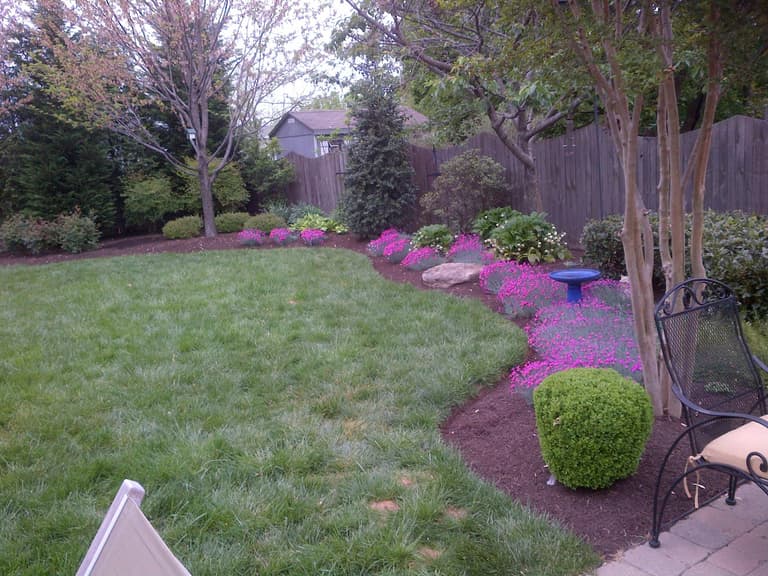
Color-rendered concepts show the overall layout, flow, and plant palette, so you can picture the design direction and key features before work begins.
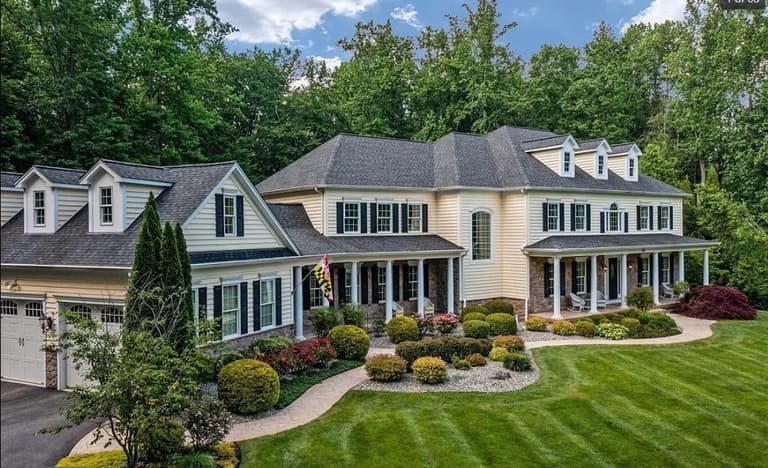
A hand-rendered concept is an artistic, true-to-life preview of the finished landscape — an optional final step that brings the whole vision together.
FAQ
Keeping a paver patio, walkway, or pool deck looking new is mostly about a few simple habits.
For routine cleaning, sweep regularly and rinse with a garden hose; for tougher grime, use mild dish soap and warm water with a stiff-bristle brush. A pressure washer on a low, fanned setting is fine occasionally, but avoid narrow high-pressure tips that can blast out the joint sand. Skip acidic or bleach-based cleaners unless they're made for pavers — they can discolor the stone.
No — sealing is optional, not required. It does help resist stains, lock in the joint sand, and deepen the color, and most sealed surfaces are re-done every three to five years. Many homeowners seal a new patio once it has fully cured and weathered a season, then decide from there.
That's efflorescence — natural mineral salts working their way to the surface as the pavers cure. It's harmless and typically fades on its own within the first year as it weathers off. If you want it gone sooner, an efflorescence cleaner made for concrete pavers will remove it.
The best defense is polymeric jointing sand, which hardens in the joints and resists weed growth and washout. Any weeds that do appear are usually windblown seed on the surface — pull or spot-treat them, and re-sand the joints if they've thinned over the years. It's a small upkeep item, not a sign the patio is failing.
Yes to shoveling — a shovel with a plastic edge won't scratch the surface. Go easy on de-icing salts, especially on installations less than a year old; rock salt (sodium chloride) is the harshest, so sand or a calcium-magnesium-acetate product is a gentler choice. Pavers handle Maryland freeze-thaw well when the base was built right, which is where most winter durability actually comes from.
FAQ
The right material depends on how you'll use the space, your budget, and the look you're after.
For most Maryland patios and driveways, interlocking pavers outlast poured concrete because they flex with freeze-thaw instead of cracking, and a damaged section can be lifted and reset rather than patched. Poured concrete is usually cheaper on day one, but cracks are hard to fix invisibly. Pavers cost more upfront and tend to win on lifespan and repairability.
Lighter colors and certain manufacturer lines run noticeably cooler underfoot than dark stone in direct sun. If a pool deck is the project, it's worth looking at samples in the sun before choosing. We'll bring options so you can feel the difference rather than guess from a catalog.
Manufactured pavers offer consistent sizing and a wide range of colors and patterns at a lower cost, which makes layout and future repairs easier. Natural stone like bluestone or flagstone gives a one-of-a-kind look with more variation, at a higher price. Both perform well when installed on a proper base.
FAQ
What drives the price and the schedule on a typical hardscape project.
The biggest drivers are size, material choice, and how much site work is needed — grading, drainage, and access can matter as much as the pavers themselves. Added features like retaining or seat walls, steps, fire features, and lighting also move the number. That's why an on-site look gives a far more accurate quote than a per-square-foot guess.
Most residential patios take one to two weeks, depending on size, site access, and any drainage work. Larger projects with walls, kitchens, or pool decks run longer. We give a firm schedule with the quote so you're not guessing.
The base — excavation, compacted gravel, and proper grading — is most of the labor and the single biggest factor in whether hardscape lasts. A thin or poorly compacted base is what causes settling, heaving, and shifting pavers a few years down the line. It's the part nobody sees, and it's the part worth doing right.
Yes — King Cuts offers flexible financing through HFS Financial, so a project can be paid over time with monthly plans. It's a common way to move forward on a larger outdoor space in one phase instead of splitting it up.
FAQ
Local conditions in Anne Arundel, Howard, Prince George's, Calvert, and Queen Anne's Counties shape how a project should be built.
It depends on the project and where you are — retaining walls above a certain height often require a permit and sometimes an engineer's involvement in Anne Arundel County, while many patios and walkways don't. We check what your specific project needs before work starts, so nothing gets built out of compliance. Rules vary by county and by site.
Durability through freeze-thaw comes from the base and the drainage, not the surface. Proper excavation depth, a well-compacted gravel base, drainage that moves water away, and edge restraint that holds the border keep pavers from heaving and shifting over the seasons. It's why we don't shortcut the part of the job that's underground.
Usually, yes. Drainage problems are solved with a combination of grading and subsurface structures that send water where it should go — sometimes as a project on its own, sometimes as the first step before a patio or pool can even go in. It's a common issue in the region and one we handle regularly.
King Cuts serves Anne Arundel, Howard, Prince George's, Calvert, and Queen Anne's Counties from Davidsonville, MD, and has since 2006. If you're near the edges of that area, it's worth asking — we'll tell you straight whether your project is a fit.
Services
Ready to talk specifics? Jump straight to the work.
Ask us directly — no obligation. We'll give you a straight answer and a free on-site consultation if you want one.
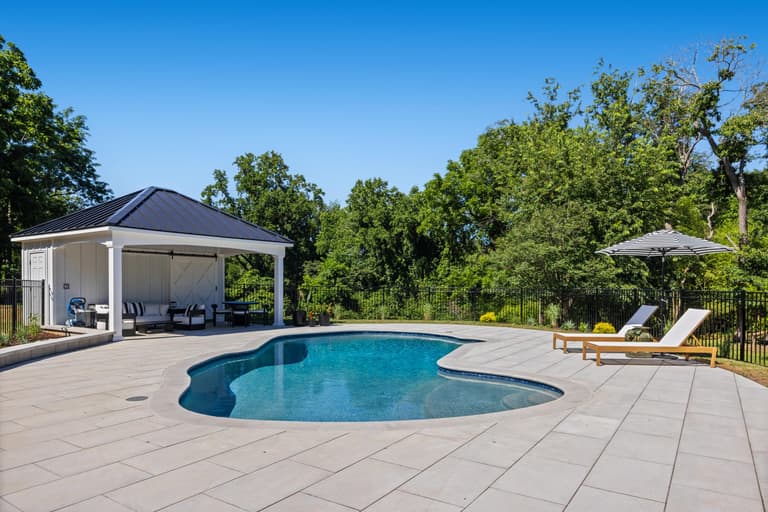
Featured Project
Gibson Island, MD
A freeform pool wrapped in a wide paver deck, with a custom pavilion for shade and dining — designed and built as one cohesive outdoor living space.
View project →